

The Great Low-Fat Diet Myth
Why “Fat-Free” Was Never the Answer
When I was studying Nutrition 25 years ago, I learned that the Fat-Free and Low-Fat Diets were unhealthy. It took a while, but I’m glad the science finally caught up to what Nutritionists have known for years. For nearly 40 years, the words “low-fat” and “fat-free” dominated grocery store shelves, doctor recommendations, and public health messaging. Fat was portrayed as the dietary villain responsible for obesity, heart disease, and nearly every chronic illness imaginable.
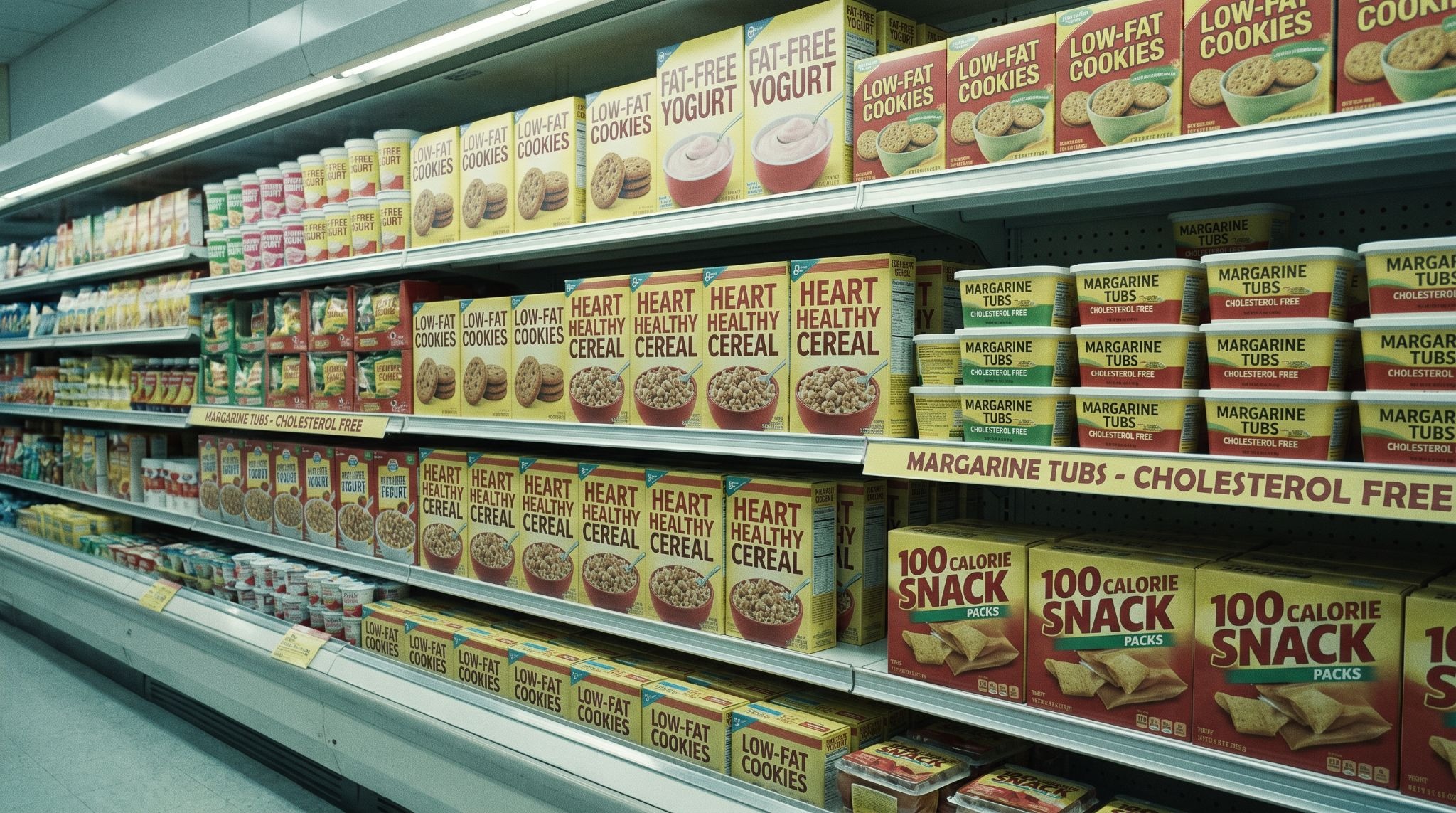
Consumers were told to avoid butter, eggs, red meat, whole milk, and natural fats — while embracing cereals, margarine, pasta, and processed “heart healthy” snack foods. The result was supposed to be a leaner, healthier society.
| Instead… Obesity rates exploded. Type 2 diabetes surged. Metabolic disease became commonplace. The low-fat era may go down as one of the greatest nutritional misunderstandings in modern history. |
| 40 Years of low-fat public health messaging — with little improvement in obesity or metabolic disease rates | The 1980s–90s saw fat-free labels become marketing gold, replacing natural foods with ultra-processed alternatives | Trans fats introduced in margarine & “healthy” low-fat foods were later found more harmful than the natural fats they replaced |
How Fat Became the Enemy
The low-fat movement gained momentum in the mid-to-late 20th century, largely driven by early research linking saturated fat to heart disease. While well-intentioned, many of these studies were incomplete, observational, or oversimplified. Public health messaging took a highly complex issue and reduced it to one simple directive:
“Eat less fat.”
By the late 1970s and throughout the 1980s and 1990s, government dietary guidelines encouraged Americans to reduce fat intake. Food manufacturers responded immediately. “Low-fat.” “Fat-free.” “Cholesterol-free.” These labels became marketing gold.
But the problem was never that simple. Not all fats are the same, and removing fat from food does not automatically make it healthier.
What Replaced Fat?
When food manufacturers removed fat, they didn’t simply leave a void — they replaced it. Most often, fat was swapped out for refined carbohydrates, sugars, artificial flavors, and industrial additives to preserve taste and texture.
| The Low-Fat Swap: What You Got Instead | |
| 🍬 Fat-Free Yogurt | Loaded with added sugar to compensate for removed fat and lost flavor. |
| 🍪 Low-Fat Cookies | Made with refined flour — calorie-dense with little nutritional value. |
| 🥣 “Heart Healthy” Cereals | Highly processed, high in sugar, low in protein and fiber. |
| 🧂 Industrial Margarine | Replaced butter with artificial trans fats — later found to be more harmful. |
| 🍭 Low-Fat Snack Foods | Ultra-processed products that left consumers hungrier and more prone to overeating. |
Ironically, many of these “healthy” foods were metabolically worse than the full-fat originals. Consumers unknowingly traded satisfying whole foods for ultra-processed products.
Fat Was Never the Real Problem
Dietary fat serves critical biological functions. The human body depends on healthy fats for essential processes that no low-fat diet can replicate:
| Why Your Body Needs Healthy Fat | |
| 🧠 Brain Function | The brain is roughly 60% fat — adequate dietary fat is essential for cognition and mood. |
| ⚡ Hormone Production | Sex hormones and stress hormones are synthesized from dietary fat. |
| 🔋 Long-Lasting Energy | Fat provides sustained fuel without the blood sugar spikes of refined carbs. |
| 🌿 Nutrient Absorption | Fat-soluble vitamins A, D, E & K require fat to be absorbed effectively. |
| 🛡️ Cell Membrane Integrity | Every cell in the body is surrounded by a membrane made partly of fatty acids. |
| 😌 Appetite Regulation | Healthy fats promote satiety, reducing cravings and the urge to overeat. |
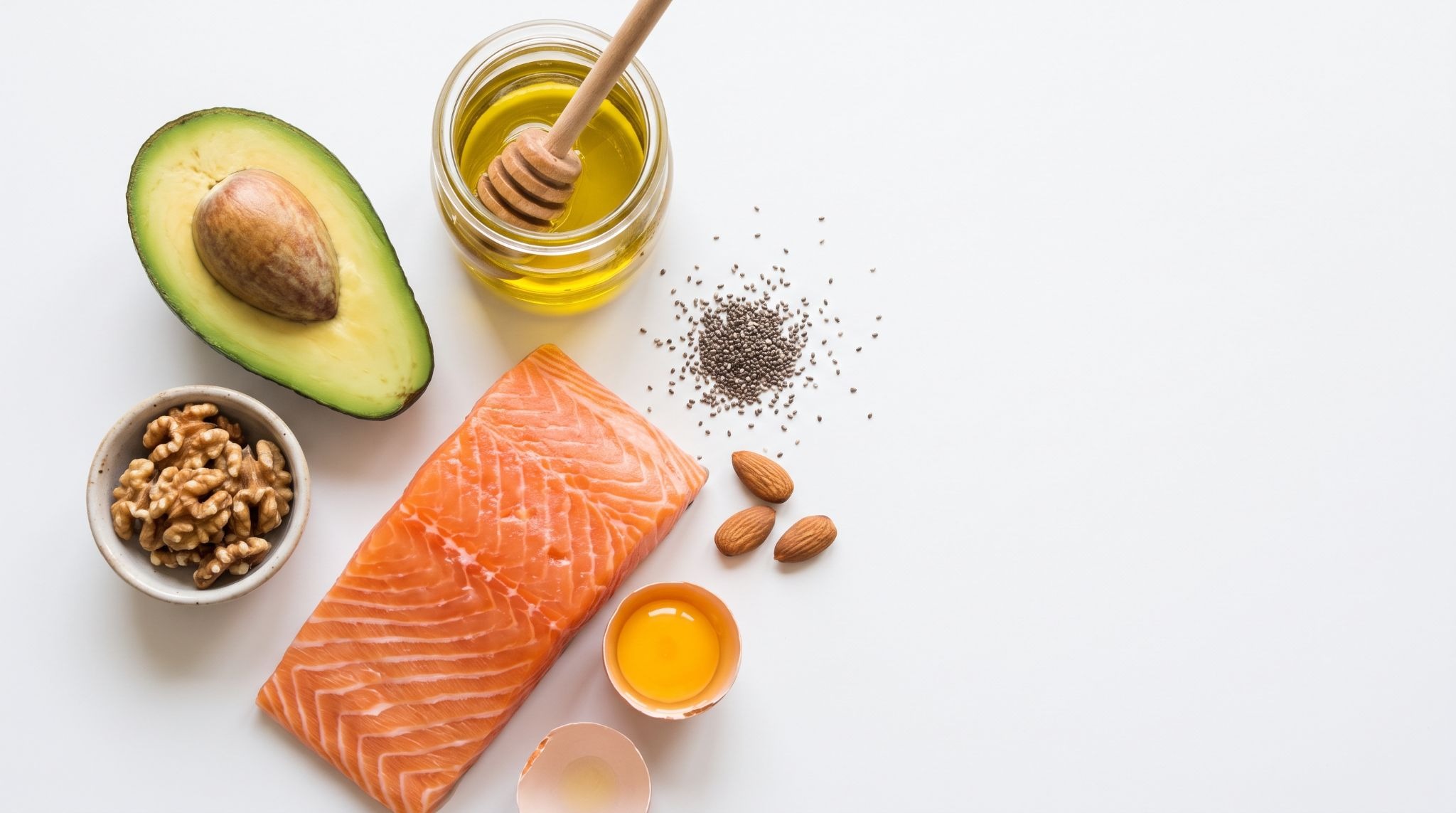
Without adequate fat intake, many people experience increased hunger, blood sugar instability, fatigue, hormonal imbalance, poor concentration, and reduced nutrient absorption.
Humans evolved consuming natural fats for thousands of years. Healthy fats — such as those found in avocados, olive oil, nuts, seeds, and fatty fish — are now strongly associated with improved metabolic function and better cardiovascular health.
The Real Issue: Sugar, Processed Food & Over-Consumption
The failure of the low-fat diet wasn’t simply about fat — it was about focusing on the wrong variable. By obsessing over fat alone, nutrition science and public policy overlooked far more important factors:
- Overall calorie intake and food quality
- Refined carbohydrates and sugar consumption
- Ultra-processed foods and industrial additives
- Sedentary lifestyles and mindless eating habits
Refined carbohydrates digest quickly, spike blood sugar, and trigger large insulin responses. Chronically elevated insulin promotes fat storage and increased hunger — creating a cycle of overeating and energy crashes. And many people consumed larger quantities of low-fat foods because they believed they were healthier. “Fat-free” became a license to overeat.
Example: Two Very Different Breakfasts
Consider the difference between these two morning meals — and what they actually do to your body:
| ⚠️ Breakfast #1 — Low-Fat | ✅ Breakfast #2 — Whole Food |
| Fat-free cereal | Eggs cooked in olive oil |
| Skim milk | Avocado |
| Glass of orange juice | Side of fresh berries |
| High sugar, quick-digesting carbs | Protein, fiber & healthy fats |
| Blood sugar spike → crash → hunger | Sustained energy + satiety all morning |
The takeaway: Low-fat does not automatically mean healthy. What matters is the quality of what you eat.
The Cholesterol Fear Was Oversimplified
For decades, dietary cholesterol was blamed for heart disease. Eggs became controversial. Butter was demonized. Margarine and processed vegetable spreads were promoted as healthier alternatives. But the science turned out to be far more complicated.
The body tightly regulates cholesterol production because cholesterol itself is essential for:
- Hormone synthesis
- Brain health and cognitive function
- Cell repair and structural integrity
- Vitamin D production
For many individuals, dietary cholesterol has only a modest impact on blood cholesterol levels. Meanwhile, some of the artificial trans fats used in processed low-fat foods and margarine were later found to be more harmful than many of the natural fats they replaced.
“In trying to eliminate traditional fats, the food industry substituted industrial ingredients that created entirely new health problems.”
The Psychological Damage of the Low-Fat Era
The low-fat movement didn’t just change eating habits — it changed how entire generations emotionally viewed food. People were taught to fear butter, cheese, egg yolks, red meat, and whole milk. They became conditioned to count fat grams instead of evaluating food quality.
This mindset encouraged consumption of heavily processed “diet foods” while discouraging nutrient-dense traditional foods humans had eaten safely for centuries. Many individuals became trapped in cycles of:
- Constant dieting and chronic hunger
- Food guilt and emotional eating
- Weight regain despite restriction
- Frustration and confusion about nutrition
Ironically, some of the most fat-phobic decades in modern history coincided with dramatic increases in obesity and metabolic disease.
A Better Approach to Nutrition
Today, nutrition science has shifted away from simplistic “fat makes you fat” thinking and toward a more balanced understanding of metabolic health. Rather than fearing entire food groups, a healthier approach focuses on:
| The Modern Nutrition Framework | |
| 🥦 Whole Foods | Minimally processed foods as close to their natural state as possible. |
| 🥚 Healthy Fats | Avocado, olive oil, eggs, nuts, seeds, fatty fish — embrace them, not avoid them. |
| 💪 Protein Quality | Adequate protein supports muscle, satiety, metabolism, and hormonal balance. |
| 🌾 Fiber Intake | Fiber from vegetables, legumes, and whole grains supports gut health and blood sugar. |
| 📉 Blood Sugar Stability | Avoiding refined carbs and sugar spikes is more impactful than avoiding fat. |
| 🚫 Reduce Ultra-Processed | Packaged foods with long ingredient lists — low-fat or not — are the real concern. |
| Not all fats are equal. Not all carbohydrates are equal. And nutrition is far too complex to reduce to one villainous nutrient. |
What Good Nutrition Does for Your Skin & Overall Wellness
At Spada Salon & Day Spa, we believe that true beauty begins from within. What you eat has a direct and measurable impact on the health of your skin, hair, and body — and the science of nutrition increasingly confirms this.
Healthy dietary fats — the very nutrients the low-fat era told us to fear — are among the most important nutrients for vibrant, resilient skin:
| How Healthy Fats Support Your Skin | |
| 💧 Hydration & Barrier | Essential fatty acids (omega-3 and omega-6) help maintain the skin’s moisture barrier, reducing dryness and sensitivity. |
| ✨ Glow & Elasticity | Vitamins A, D, E & K — all fat-soluble — are critical for skin cell renewal, elasticity, and radiance. |
| 🛡️ Anti-Inflammation | Omega-3 fats from fatty fish and walnuts help reduce systemic inflammation that shows up in the skin as redness or acne. |
| 🧴Collagen Support | Adequate dietary fat supports the absorption of antioxidants and collagen precursors that keep skin firm. |
Conversely, chronic consumption of refined carbohydrates and added sugars — the very things the low-fat diet promoted — accelerates a process called glycation, which damages collagen fibers and contributes to premature aging of the skin.
When you pair quality nutrition with professional skincare, the results are transformational. Our licensed estheticians at Spada can help address the skin concerns that often reflect what’s happening inside — dehydration, dullness, breakouts, and sensitivity.
Spada Wellness & Skincare Services
| Service | Price | Why It Connects to Nutrition |
| Signature Facial | $113.30 | Deep cleanse, exfoliation, extractions & nourishing serum. Ideal for restoring glow when diet or stress has dulled the skin. |
| AlgoMask Facial | $150.38 – $161.71 | Hydrolyzed marine algae delivers vitamins, minerals & amino acids. Remarkable for dehydrated, inflamed, or reactive skin. |
| Oxygenating Facial | $155.53 – $164.80 | 5-step clinical treatment for oily or congestion-prone skin — addresses the type of breakouts often linked to high-sugar diets. |
| Sea C Spa Facial | $161.71 – $172.01 | High-potency Vitamin C + marine plants + anti-aging peptides. Perfect antioxidant reset after dietary or seasonal stress. |
| Derm Renewal Clinical Peel | $132.87 – $141.11 | Renews dull, sluggish skin. Ideal complement to a nutrition reset — clear the cellular slate. |
| ✦ Ready to See the Difference Inside & Out? Book a facial at Spada Salon & Day Spa — Fort Myers, FL → Book Your Appointment |
The Bottom Line
The idea that fat is inherently harmful is one of the most persistent myths in modern nutrition. The real issue was never simply fat itself — it was the quality of the overall diet.
The low-fat movement encouraged millions of people to replace nourishing, satisfying foods with highly processed alternatives loaded with sugar and refined carbohydrates. In many cases, this shift worsened the very health problems it was supposed to solve.
Real health does not come from eliminating one nutrient out of fear. It comes from balance, food quality, metabolic awareness, and understanding how the body actually works.
For many people, abandoning the fear of healthy fats has been one of the most liberating and beneficial nutritional shifts of the modern era. Want to learn more? Read more on the Spada wellness blog.
| ✦ Invest in Your Skin. Invest in Yourself. Explore Spada’s full menu of facial and wellness treatments in Fort Myers, FL. → Browse Services & Book Online |
Spada Salon & Day Spa
13161 McGregor Blvd, Fort Myers, FL 33919 | (239) 482-1858